

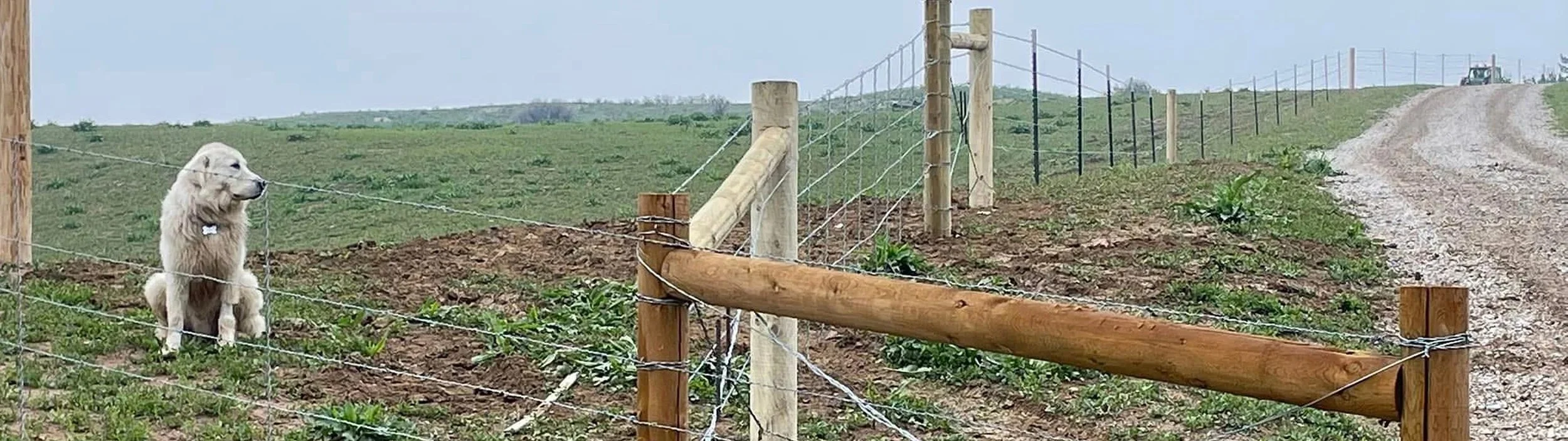
Cattle Barbed Wire Installation
Colorado Cattle Barbed Wire Built for Real Ranch Pressure
Barbed wire and cattle go together for good reason. It is effective, economical, and proven across millions of acres. But not all barbed wire fence is created equal. The difference between a fence that holds cattle for decades and one that lets them through next spring comes down to how it is built.
I'm Dylan with Alpine Earthworks. My team and I install barbed wire cattle fencing built to handle the realities of Colorado ranching. Proper gauge wire, proper post spacing, proper bracing, and proper tension. The basics done right.
What We Build Into Every Cattle Fence
- 12.5 gauge high-tensile barbed wire - maximum strength and longevity under animal pressure.
- Four to five strand configuration - sized to your cattle, terrain, and known fence testers.
- Tightened post spacing on hills and corners - where cattle press hardest and wire wants to sag.
- Heavy-duty corner and brace assemblies - anchors that hold tension across the full line.
- Colorado-specific tension - set with room for our temperature extremes.
Need barbed wire that keeps your cattle where they belong? Give me a call at 720-272-7760 or fill out the form below.
Barbed Wire for Cattle Has to be Extremely Durable
Cattle push, lean, and scratch against fencing every day. The fence needs to handle that constant pressure without stretching, sagging, or losing strands. A fence built for a residential property boundary will not hold up to a feed-line lean from a 1,400-pound cow in week one.
Colorado cattle country throws everything at your fence. Wind loads along the eastern plains. Snow buildup in the mountains. Elk and deer hitting the wire. Freeze-thaw heaving posts out of the ground. We build for these conditions because standard fencing practices from other states do not hold up here.
How We Build Cattle Barbed Wire That Holds
Every cattle fence my team and I build is sized to the operation, the terrain, and the animals it has to contain.
- Operation assessment - Herd size, grazing pattern, and terrain reviewed before we spec the fence.
- Strand and gauge planning - Four or five strands of 12.5 gauge wire, chosen for your specific cattle pressure.
- Heavy corner bracing - H-brace assemblies built first to anchor tension across long runs.
- Terrain-aware post spacing - Tighter on hills, curves, and low spots where cattle press hardest.
- Uniform tension with temperature allowance - Wire set tight enough to function without failing in extreme cold.
Covering Colorado Cattle Country
From Eastern Plains cow-calf operations to high-country summer pastures on the Western Slope, my team and I install cattle barbed wire across Colorado. Every operation is different, and we build the fence your cattle and country need.
Ready for cattle fencing that holds? Give me a call at 720-272-7760 or fill out the form below.
Exploring Your Options?
See all the barbed wire fencing services we offer across Colorado.
Common Questions About Cattle Barbed Wire
What is the best gauge barbed wire for cattle? 12.5 gauge is the best all-around choice for cattle fencing. It is strong enough to handle animal pressure, holds tension well, and lasts for decades. 14 gauge works for lighter applications but does not have the same strength and longevity.
How far apart should posts be for cattle barbed wire? Standard spacing is twelve to sixteen feet on flat ground. On hills, curves, and corners, closer spacing is needed to maintain proper wire tension and containment. We adjust spacing based on your terrain.
Will barbed wire keep bulls in? A well-built four to five strand barbed wire fence contains most bulls. A bull that is determined to reach cows on the other side may challenge any fence. For known fence breakers, adding a hot wire can make the difference.
How does barbed wire compare to high-tensile for cattle? Barbed wire provides a physical and psychological deterrent. High-tensile smooth wire is stronger per strand but relies more on electric charge for containment. Both work well for cattle. The right choice depends on your operation and preferences.
Can you install barbed wire fencing in winter? We can work through much of the Colorado winter. Frozen ground makes post setting more challenging, and wire behaves differently in extreme cold. We account for these factors in our installation and timing.

I’m Dylan, owner of Alpine Earthworks.
My team specializes in rural solutions for Colorado landowners who care about quality.
Equestrian and agricultural fencing
Land grading and foundation excavation
Fire mitigation and brush clearing
Asphalt paving and driveway installation
Septic systems and utilities
I’ll be your point of contact managing all the details, so you don’t have to juggle contractors.
You’ll feel so relieved seeing work getting done right. We take pride in honest work and communication. We use top-tier equipment and hold ourselves to a high standard of excellence.
Few things compare to bringing a client’s vision to life. I can’t wait to help with yours.